Introduction
Grabba leaves, also known as fronto leaves, have a rich history and offer a distinct smoking experience. In this blog post, we will delve into the history, explore the different grades available, discuss the various types of tobacco leaves, and highlight their unique features.
The Origins and Evolution of Grabba Leaves
The history of grabba (fronto) leaves can be traced back to the Caribbean, particularly Jamaica, where they have been used for generations in the art of rolling blunts. Grabba leaves were traditionally sourced from tobacco plants cultivated in the region. Over time, the popularity of tobacco leaves spread to other parts of the world, as smoking enthusiasts sought an authentic and robust smoking experience. Today, tobacco leaves are widely available and have become an integral part of the smoking culture.
Grades of Grabba Leaves: Determining Quality
Grabba (fronto) leaves are available in different grades, which determine their quality and characteristics. The grading system takes into account factors such as leaf size, texture, color, and overall quality. Higher-grade tobacco leaves are typically larger, have a smooth texture, and exhibit a rich, dark color. These top-grade leaves are often favored by experienced smokers who appreciate the full-bodied flavor and potent smoking experience they provide. Lower-grade leaves may have smaller sizes, slightly rougher textures, and lighter colors, but they still offer a satisfying smoking experience for those who prefer a milder taste.
Exploring the Types of Grabba Leaves
Within the world of grabba (fronto) leaves, there are various types available, each with its unique characteristics and flavors. One popular type is the Connecticut Broadleaf, known for its smooth texture and slightly sweet taste. This type of tobacco leaf is often favored by those who enjoy a milder smoking experience. Another type is the Dark Air-Cured grabba leaf, which undergoes a longer curing process, resulting in a more robust flavor profile. This type of fronto leaf is preferred by smokers seeking a more intense smoking experience. Additionally, some fronto leaves are infused with flavors such as honey, rum, or fruit extracts, providing a personalized and enhanced smoking experience.
Understanding Tobacco Anatomy: Ligero, Viso, Seco, and Volado
Related: What is Grabba?
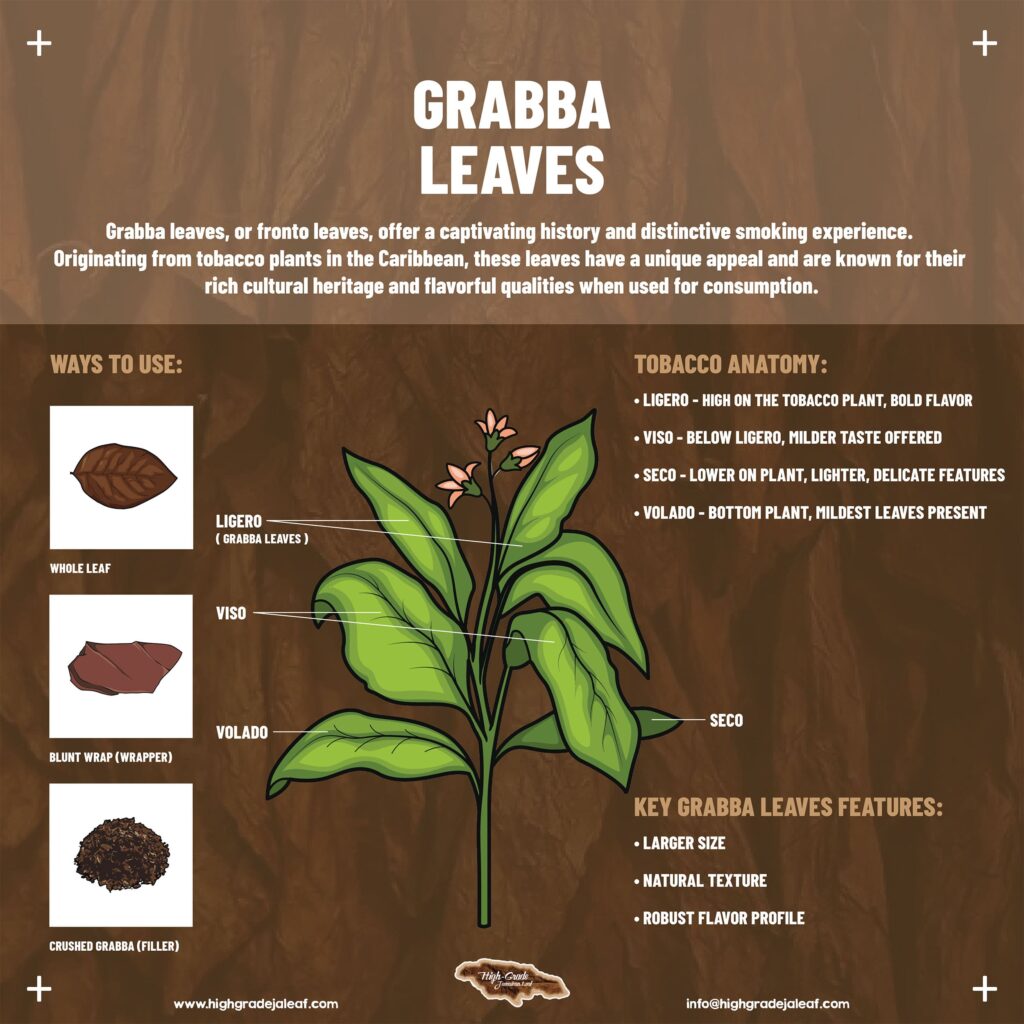
Tobacco leaves have distinct qualities determined by their anatomy. Four essential components of tobacco anatomy are ligero, viso, seco, and volado.
Ligero, located at the top of the tobacco plant, boasts a bold and robust flavor. These dark and thick leaves contain higher nicotine levels, contributing to a powerful smoking experience. Ligero is the leaf used for grabba leaf.
Viso, positioned below ligero, offers a slightly milder taste, striking a balance between strength and smoothness. Often used for blending, viso leaves add complexity to the overall flavor profile of grabba leaves.
Seco, found in the lower part of the tobacco plant, possesses lighter and more delicate characteristics. With a smoother texture, seco leaves are commonly used in cigar rolling, providing a nuanced smoking experience.
Volado, at the bottom of the tobacco plant, consists of the mildest leaves. These leaves ensure an even and consistent burn, enhancing the smoking experience with their gentle flavor.
Understanding the various components of tobacco anatomy allows enthusiasts to appreciate the complexity of fronto leaves. By blending different leaf types, manufacturers can create diverse flavors, catering to individual preferences. Whether you seek a bold or milder smoke, the anatomy of tobacco leaves plays a pivotal role in delivering the desired flavor profile.
Features of Grabba Leaves
Grabba leaves offer several features that contribute to their popularity among smokers. One notable feature is their larger size, which allows for a greater amount of tobacco or herbal blend to be packed into the blunt, resulting in a more potent smoking experience. The natural texture of the fronto leaves adds to the tactile sensation of rolling and smoking, enhancing the overall ritualistic aspect of the experience. Moreover, the robust flavor profile ranges from earthy to slightly sweet and provides a unique and enjoyable smoking experience for those seeking a full-bodied taste.

Conclusion
Grabba leaves have a fascinating history and offer a unique smoking experience. With different grades, types, and features, smokers have the opportunity to choose the grabba leaves that best suit their preferences. Whether it’s the rich history, the high-quality grades, the diverse types, or the distinctive features that continue to captivate smoking enthusiasts around the world. By understanding the history, grades, types, and features, smokers can make informed choices and enjoy the authentic and robust smoking experience that grabba leaves provide.
For more information on all things grabba leaf and to check out our High-Grade Jamaican Leaf grabba leaves products, visit https://shop.highgradejaleaf.com/
Grabba Leaves Near Me
Discover the world of grabba leaf and smoking accessories with High-Grade Jamaican Leaf. Use our store locator to find authorized retailers near you that stock our products. – “Grabba Leaf Near Me“.
- Convenience Stores
- Gas Stations
- Smoke Shops
- E-commerce (Online)

Shop Our Featured Products


